Outdoor Kitchen Design Ideas for Colorado Living
The Appeal of Outdoor Kitchens in Colorado
Colorado's 300+ days of sunshine a
ually make outdoor living spaces essential rather than optional. Outdoor kitchens extend your home's entertaining capacity while taking advantage of our spectacular weather and mountain views.
Denver-area homeowners increasingly view outdoor kitchens as must-have features rather than luxury additions. Well-designed outdoor kitchens provide 8-10 months of a
ual use in our climate, justifying the $15,000-60,000+ investment while adding significant home value.
Colorado's unique climate—intense sun, temperature swings, low humidity, and occasional snow—requires specific design considerations:
UV resistance: Colorado's high elevation means 25% more UV exposure than sea level. Choose fade-resistant fabrics for cushions, UV-stable countertops, and powder-coated metal finishes that resist sun damage.
Temperature extremes: Summer highs reach 95°F+ while winter lows drop below 0°F. This 100+ degree range cracks inferior materials. Use frost-proof pavers, weather-resistant cabinetry, and appliances rated for outdoor use.
Wind considerations: Front Range winds gust to 50+ mph. Anchor all structures properly, use wind-resistant umbrellas or permanent shade structures, and protect grill flames with wind guards or positioning.
Snow load requirements: Even outdoor kitchens need structures that handle snow loads. Denver building code requires pergolas and covers to support 30 pounds per square foot. This often surprises homeowners who view these as decorative features.
Essential Outdoor Kitchen Components
Successful outdoor kitchens include these core elements:
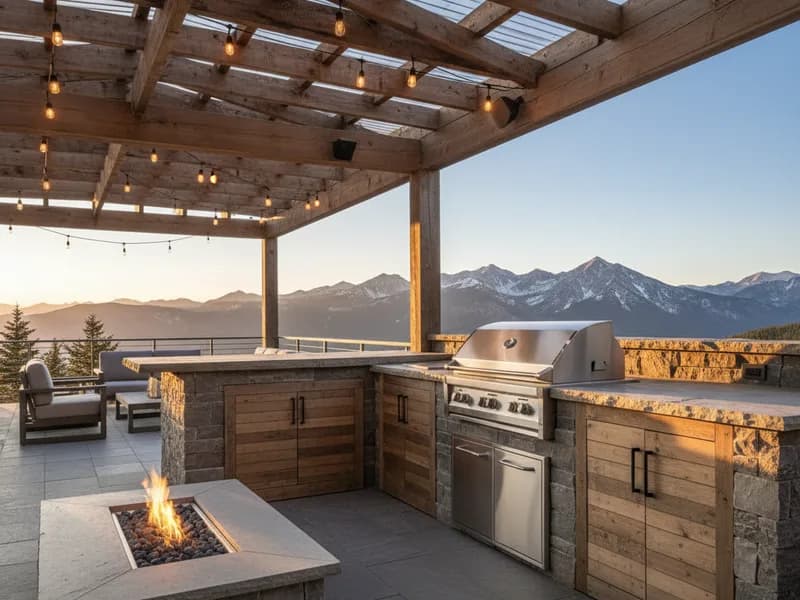
Built-in grill: The centerpiece of any outdoor kitchen. Quality built-in grills (Weber, Lynx, Twin Eagles) cost $2,000-8,000 depending on size and features. Choose stainless steel construction (304 or 316 grade) for Colorado's climate. Include side burners for sauces and sides.
Countertop workspace: Plan 3-4 feet of counter space on each side of the grill for food prep. Granite, concrete, and tile withstand Colorado weather better than wood or laminate. Budget $80-150 per square foot installed for quality outdoor countertops.
Storage cabinets: Weather-resistant cabinets store grilling tools, propane, and supplies. Stainless steel or marine-grade polymer cabinets ($200-500 per linear foot) resist moisture and temperature swings better than wood.
Refrigeration: Outdoor-rated refrigerators or beverage centers keep drinks cold and reduce indoor trips. Units designed for outdoor use withstand temperature extremes and moisture. Expect $1,200-3,500 for quality outdoor refrigerators.
Sink and ru
ing water: Hot and cold water makes food prep and cleanup convenient. Requires water line trenching and freeze-proof installation. Basic outdoor sinks cost $800-2,000 installed, while custom setups run $2,500-5,000+.
Outdoor Kitchen Cost Breakdow
nUnderstanding costs helps set realistic expectations:
Basic setup ($15,000-25,000): Built-in grill, modest countertop space, simple storage, no ru
ing water or electricity. Suitable for homeowners who primarily grill and want clean built-in appearance.
Mid-range kitchen ($25,000-45,000): Quality built-in grill, ample counter space, weather-resistant cabinets, outdoor refrigerator, basic sink, electrical outlets, and simple pergola or shade structure. This tier provides full outdoor cooking functionality.
High-end kitchen ($45,000-80,000+): Premium grill, pizza oven, bar with seating, extensive counter space, outdoor-rated appliances (refrigerator, ice maker, warming drawers), custom stone or tile work, covered dining area with heating/lighting.
Cost factors: Size and materials dramatically affect pricing. Natural stone costs more than pavers, custom stainless fabrication exceeds pre-made components, and extensive utility runs (gas, water, electric) add thousands to project costs.
Fuel Options: Gas vs Charcoal vs Wood
Choosing fuel type affects design, cost, and cooking experience:
Natural gas: Most convenient option if gas lines exist nearby. Requires professional installation ($1,500-3,500 for line runs) but eliminates propane tank exchanges. Natural gas grills cost slightly more than propane versions but save money long-term.
Propane: Flexible placement since you're not tied to gas line locations. Most built-in grills work with propane tanks stored in cabinets below. Budget $60-80 a
ually for propane if you grill regularly.
Charcoal: Traditional flavor appeals to purists. Requires less infrastructure but creates more mess and demands more cooking skill. Less common in built-in outdoor kitchens due to ash disposal and heat control challenges.
Wood-fired pizza ovens: Growing in popularity for Colorado outdoor kitchens. Ooni and Alfa make residential models ($1,500-5,000) that reach 900°F+ for authentic Neapolitan pizza. Custom masonry ovens cost $5,000-15,000 but create stu
ing focal points.
Countertop Materials for Colorado
Choose countertops that handle freeze-thaw cycles and UV exposure:
Granite: Excellent choice for Colorado outdoor kitchens. Naturally weather-resistant, handles temperature swings, resists staining and scratching. Sealed granite lasts decades outdoors. Expect $80-120 per square foot installed.
Concrete: Custom-formed concrete creates unique looks and accommodates any shape. Properly sealed concrete withstands Colorado weather. Colors and textures are limitless. Budget $100-150 per square foot for quality decorative concrete.
Tile: Porcelain or natural stone tile over concrete backer provides durable, attractive surface. Grout lines require periodic resealing. Most affordable option at $60-100 per square foot installed.
Avoid: Wood countertops (even treated lumber deteriorates), laminate (moisture and sun damage), and low-quality concrete (cracks in freeze-thaw cycles). Invest in proper materials to avoid premature replacement.
Shade Structures and Coverage
Colorado sun demands shade for comfortable outdoor cooking and dining:
Pergolas: Popular Colorado choice providing filtered shade while allowing breeze. Cedar or composite materials withstand weather. Basic pergolas cost $3,000-8,000, while larger custom structures run $8,000-20,000.
Solid roof covers: Full protection from sun and rain extends usability. Requires structural engineering for snow loads. Gabled or shed roof designs match home architecture. Budget $12,000-35,000 depending on size and materials.
Retractable awnings: Flexibility to expose or cover outdoor kitchen as needed. Motorized versions cost $2,000-6,000. Must be retracted during high winds—common in Denver—limiting their practicality.
Umbrellas: Least expensive option ($300-2,000) but least durable in Colorado wind. Secure in heavy-duty bases and close when not in use.
Heating Solutions for Extended Season Use
Heating extends outdoor kitchen season through spring and fall:
Patio heaters: Propane or natural gas patio heaters provide focused warmth. Quality models cost $300-1,500 and heat 15-20 foot radius. Less effective in wind but work well under covered areas.
Fire pits: Dual-purpose as heating and ambiance. Gas fire pits ($800-3,500) light instantly and control easily. Wood-burning pits ($300-2,000) create traditional campfire experience but require more maintenance.
Infrared heaters: Wall or ceiling-mounted infrared heaters provide consistent warmth without flames. Electric models cost $200-800 each and work well in covered outdoor kitchens. More energy-efficient than propane heaters.
Fireplaces: Outdoor fireplaces ($3,000-15,000) create dramatic focal points while providing significant heat. Prefab units cost less than custom masonry but both extend season use considerably.
Outdoor Kitchen Layouts
Layout affects functionality and flow:
L-shaped kitchens: Corner layouts maximize counter space in compact areas. Place grill at center with prep space on both sides. This layout works well for 10x12 foot spaces.
Island configurations: Freestanding islands allow 360-degree access. Include seating on one side for entertainment. Requires more space (12x16+ feet) but creates impressive gathering spot.
Straight line: Simplest layout works in narrow spaces like along house walls or fence lines. Less ideal for traffic flow but most economical for installation.
U-shaped: Wraparound design creates defined cooking zone with maximum counter and storage. Requires substantial space (14x14+ feet) but provides restaurant-style functionality.
Work triangle: Like indoor kitchens, arrange grill, sink, and refrigerator in triangle pattern with 4-8 feet between points. This creates efficient cooking workflow.
Utility Co
ections and Infrastructure
Proper utilities make outdoor kitchens functional:
Gas lines: Professional installation required. Costs vary based on distance from meter ($15-30 per linear foot). Include shut-off valves at kitchen for safety. Size lines properly—most grills need 60,000-90,000 BTU capacity.
Electrical: Dedicated circuits required for refrigeration, lighting, and outlets. Underground conduit protects wiring. GFCI outlets required for outdoor use. Budget $1,500-3,500 for electrical installation depending on distance and load.
Water and drainage: Hot and cold water requires trenching from house, backflow prevention, and freeze-proof installation (drain lines for winter). Drainage for sinks either co
ects to house plumbing or drains to yard (check local codes). Water installation costs $2,000-5,000.
Winterization: Colorado outdoor kitchens need winterization systems to prevent freeze damage. Install drain valves on water lines, disco
ect water sources, and insulate exposed pipes.
Permits and HOA Considerations
Don't overlook regulatory requirements:
Denver building permits: Required for permanent structures, gas line installations, electrical work, and plumbing co
ections. Permit fees range from $200-800. Factor 2-4 weeks for approval.
Setback requirements: Structures must maintain specific distances from property lines (typically 5 feet). Corner lots have additional visibility triangle requirements. Verify setbacks before finalizing design.
HOA approval: Many Denver neighborhoods require architectural review committee approval for outdoor kitchens. Submit detailed plans showing dimensions, materials, and colors. This process takes 2-6 weeks typically.
Homeowners insurance: Notify your insurance company about outdoor kitchen additions. This typically increases coverage limits but rarely affects premiums significantly. Failure to disclose could jeopardize claims.
Making Your Outdoor Kitchen Investment Pay Off
Maximize value and enjoyment:
Match your home value: Outdoor kitchens make most sense in homes valued at $500,000+. In this price range, expect to recoup 50-70% of costs when selling. Lower-priced homes rarely justify elaborate outdoor kitchens.
Quality over quantity: Better to build smaller kitchen with quality materials than expansive setup with inferior components. Premium grills and weather-resistant finishes last 15-20+ years while cheap alternatives need replacement in 5-7 years.
Plan for growth: Install infrastructure (gas, water, electric) for ultimate vision even if budget limits initial build. Adding utilities later costs significantly more than installing them initially.
Professional installation: Gas, electrical, and plumbing require licensed contractors. DIY mistakes create safety hazards and code violations that cost more to correct than hiring professionals initially.
Peak Builders specializes in Colorado outdoor kitchens designed for our unique climate. We handle permits, coordinate trades, and create outdoor spaces you'll use throughout our gorgeous Colorado seasons. Contact us for a free consultation and design.
Sources: National Kitchen & Bath Association, Outdoor Living Brands, Hearth, Patio & Barbecue Association, Colorado State University Extension
Related Resources
Services:
- Outdoor Kitchens - Professional outdoor kitchen construction
- Deck Building - Create the perfect outdoor space
- Concrete Pavers - Durable outdoor surfaces
- Kitchen Remodeling - Indoor kitchen upgrades
More Reading:
- Kitchen Remodeling Trends - Indoor kitchen inspiration
- Deck Building Guide - Outdoor living spaces
- Sustainable Materials - Eco-friendly outdoor options