10 Kitchen Remodeling Trends for Denver Homes in 2025
10 Kitchen Remodeling Trends for Denver Homes in 2025
Denver homeowners are reimagining their kitchens in ways that reflect both the city's unique character and broader shifts in how we live. After spending years watching home values climb and design preferences evolve, the kitchen remodeling landscape in 2025 looks nothing like it did even three years ago. The Mile High City's particular blend of outdoor lifestyle, tech-forward thinking, and appreciation for craftsmanship is creating kitchen trends that feel distinctly Denver while pushing the envelope on what's possible.
What's driving these changes? For one, Denver's housing stock—much of it built between the 1950s and 1990s—is hitting that sweet spot where kitchens need serious updating. Couple that with the city's influx of younger homeowners who've spent the past few years cooking at home more than any previous generation, and you've got a perfect storm of renovation activity. The kitchens emerging from this wave aren't just prettier versions of what came before. They're fundamentally different spaces that reflect how Denver lives in 2025.
The Return of Warm, Layered Color
Walk into any design showroom along South Broadway or in the Highlands, and you'll notice something immediately: white kitchens aren't dominating the conversation anymore. Denver homeowners are embracing warmer, more complex color palettes that feel grounded and livable. We're seeing rich terracotta tones, deep forest greens, and surprisingly sophisticated takes on rust and clay colors that echo Colorado's natural landscape.
The shift isn't just aesthetic. After years of sterile white kitchens that showed every fingerprint and felt cold during Denver's long winters, homeowners are craving spaces with soul. One designer I spoke with recently completed a kitchen in Washington Park using a combination of sage green lower cabinets and natural walnut uppers—a look that would've seemed risky five years ago but now feels perfectly calibrated to the moment. The homeowners specifically wanted something that "felt like Colorado" without resorting to obvious mountain lodge clichés.
This color trend extends beyond cabinetry into backsplashes, where we're seeing handmade tiles in earthy glazes replace the subway tile that dominated for so long. Zellige tiles—those slightly irregular, hand-glazed Moroccan tiles—are particularly popular in Denver right now, often in colors like burnt sie
a or deep teal. They catch light beautifully and add texture that makes kitchens feel more crafted than manufactured. The price point runs higher than standard tile, typically $25-40 per square foot installed, but Denver buyers are willing to invest in materials that feel special.
Appliance Integration Reaches New Heights
The stainless steel appliance era is quietly ending in high-end Denver remodels. What's replacing it is far more sophisticated: fully integrated appliances that disappear into cabinetry, creating seamless walls of woodwork interrupted only by the occasional subtle handle. This trend started with refrigerators—panel-ready models that accept custom cabinet fronts—but it's now extending to dishwashers, wine coolers, and even ranges.
Denver homeowners are particularly drawn to this approach because it solves a problem specific to many of the city's homes: kitchens that open directly onto living spaces. When your kitchen is visible from your family room (as it is in most Denver homes built after 1990), you don't necessarily want a showroom's worth of gleaming appliances on display. The integrated approach lets the architecture and materials shine instead of the equipment.
The technology enabling this shift has improved dramatically. Panel-ready refrigerators from brands like Thermador and Sub-Zero now come with sophisticated hinge systems that handle the weight of cabinet panels without sagging. Induction cooktops are being installed flush with countertops, creating completely smooth surfaces when not in use. One project in Cherry Creek recently featured a cooktop that sits behind a motorized cabinet door—when you're not cooking, it's completely hidden behind what looks like a drawer front.
This level of integration doesn't come cheap. A fully integrated kitchen with panel-ready appliances typically adds $15,000-30,000 to a remodel compared to standard appliances. But for Denver's design-conscious homeowners, especially those in neighborhoods like Wash Park, Hilltop, and parts of Stapleton (now Central Park), it's become the expected standard rather than a luxury upgrade.
Dual-Purpose Islands That Actually Work
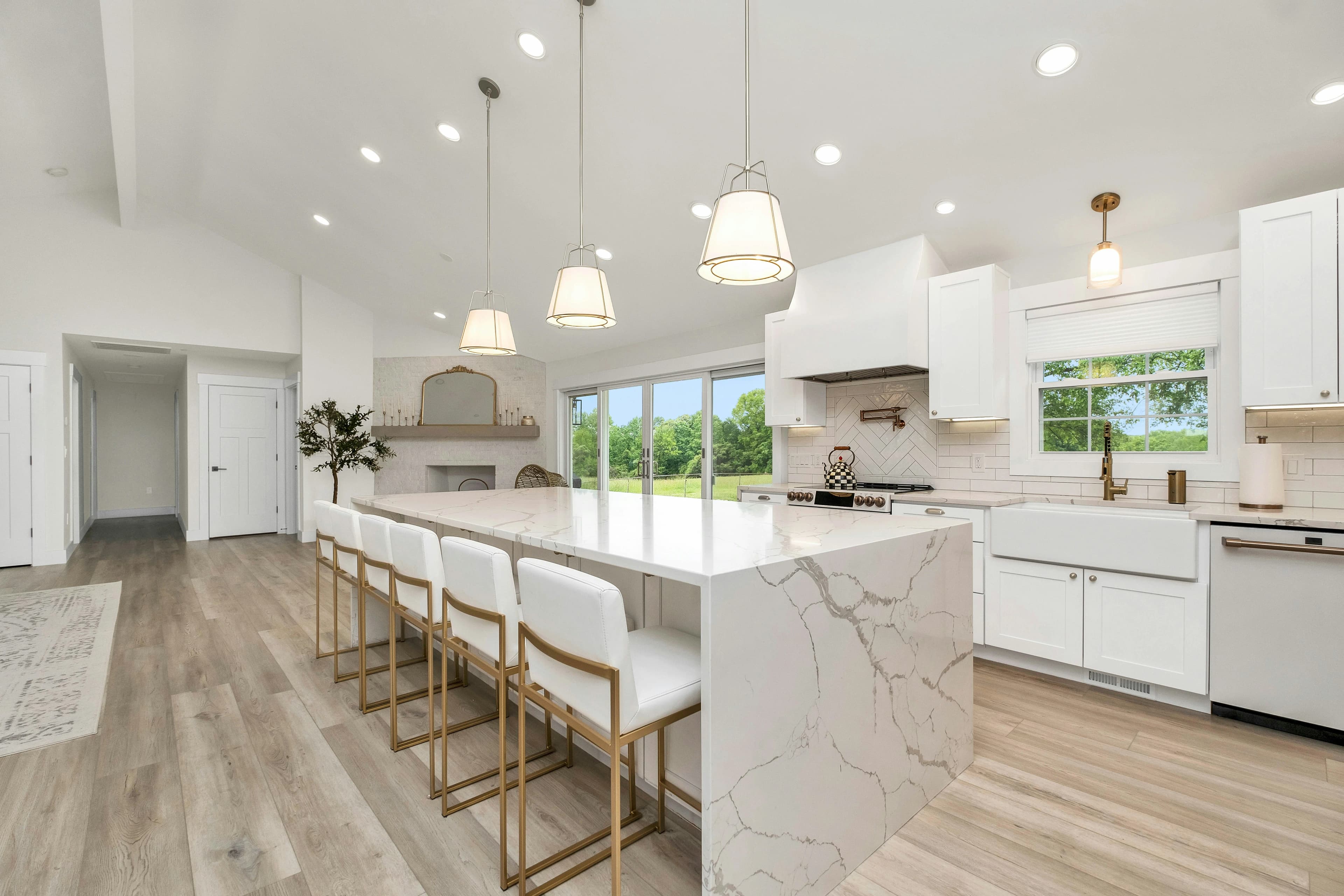
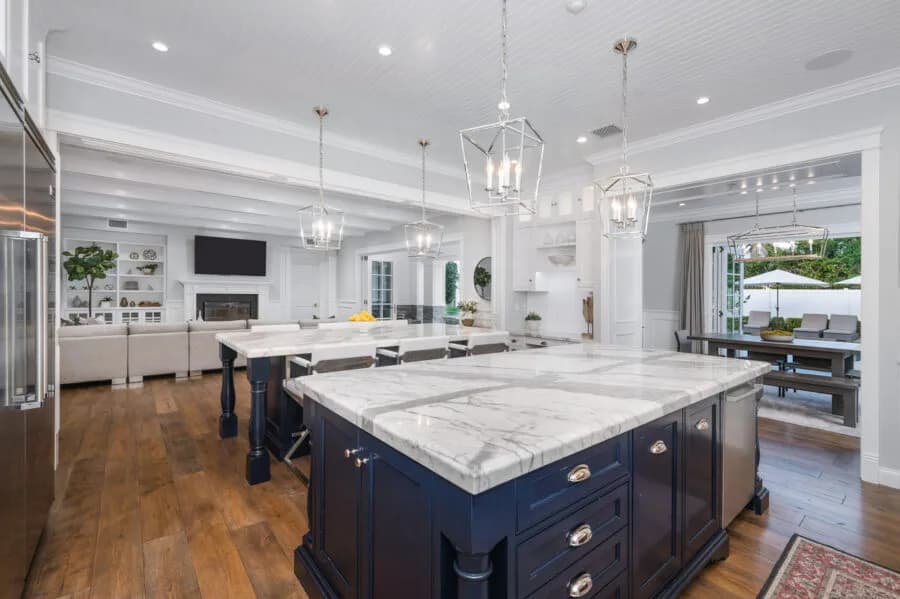
Kitchen islands have been standard in Denver homes for decades, but 2025 is seeing a complete rethinking of how they function. The traditional model—a rectangular counter with seating on one side and storage below—is giving way to more complex, multi-zone islands that serve distinct purposes simultaneously. These aren't just bigger islands. They're smarter ones.
The most successful designs we're seeing create clear zones within the island footprint. One end might feature a prep sink with a dedicated work surface, while the other end transitions to a lower counter height (typically 30 inches instead of the standard 36) that works better for seated tasks or for kids doing homework. The middle section often includes a raised bar area at 42 inches for casual dining. This three-height approach sounds complicated, but when executed well, it creates an island that multiple people can use at once without getting in each other's way.
Denver's particular love affair with entertaining is driving another island i
ovation: built-in beverage stations. These go beyond a simple wine fridge. We're talking about dedicated zones with under-counter ice makers, beverage refrigerators, and storage for glassware and bar tools. Some include small sinks specifically for rinsing glasses or filling water pitchers. The goal is to keep guests out of the main work triangle while still giving them access to drinks and ice.
Storage within these islands has also evolved significantly. Instead of the standard cabinet doors, designers are incorporating deep drawers with custom dividers, pull-out trash and recycling centers, and even charging stations with built-in outlets and USB ports. One recent project in Lowry included a drawer specifically designed to store and charge multiple devices overnight, keeping counters clear of tangled cords. The island essentially becomes the command center for the entire home.
Thoughtful Pantry Design Becomes Essential
The pandemic permanently changed how Denver families shop for groceries and store food. The result? Pantries have moved from nice-to-have to absolutely essential, and their design has become far more sophisticated. We're not talking about a closet with wire shelving anymore. These are carefully pla
ed storage systems that rival the main kitchen in terms of design attention.
Walk-in pantries are being designed with countertop space for small appliances that would clutter the main kitchen—think coffee stations, toaster ovens, and stand mixers. This "working pantry" concept lets homeowners keep their main counters clear while still having everything accessible. The typical setup includes a counter at standard height with outlets, open shelving above for frequently used items, and deeper storage below for bulk goods and less-used equipment.
For homes where a walk-in pantry isn't possible (common in Denver's older neighborhoods where square footage is tight), we're seeing incredibly clever cabinet-based solutions. Floor-to-ceiling pantry cabinets with pull-out shelving systems can store an impressive amount while taking up minimal floor space. Some incorporate swing-out shelving that makes every inch accessible, eliminating the black hole effect of traditional deep shelves where items get lost in back.
The materials and finishes in these pantries matter too. Denver homeowners are treating pantries as extensions of the kitchen rather than utilitarian storage spaces. That means the same attention to cabinet quality, lighting, and hardware extends into the pantry. LED lighting on each shelf makes everything visible, while quality drawer slides and hinges ensure the system stays functional after years of daily use. Budget-wise, a well-designed pantry system adds $3,000-8,000 to a remodel depending on size and complexity, but it's consistently rated as one of the highest-value investments by homeowners a year after completion.
Dramatic Range Hoods as Focal Points
For years, Denver homeowners tried to hide or minimize their range hoods, treating them as necessary evils rather than design opportunities. That thinking has completely flipped. In 2025, the range hood is often the most dramatic element in the kitchen, a sculptural piece that draws the eye and sets the tone for the entire space.
Custom metal hoods are leading this trend, particularly in styles that reference traditional European designs but with cleaner, more contemporary lines. We're seeing hoods fabricated from brass, copper, blackened steel, and even zinc, often with strapped or riveted details that add texture and visual weight. These aren't subtle elements—they're meant to be noticed, often extending all the way to the ceiling and incorporating open shelving or display niches on either side.
The shift toward cooking as a more central home activity is driving this trend. Denver homeowners who are serious about cooking want ventilation that actually works, which means larger, more powerful systems. But if you're going to have a hood that dominates the wall, it might as well be beautiful. Custom fabricated hoods typically start around $5,000 and can easily reach $15,000 or more for elaborate designs with integrated lighting and specialty finishes.
For homeowners working with tighter budgets, there's a middle ground: plaster hoods built on-site by skilled craftspeople. These can be shaped to any profile and finished to match walls, creating a more architectural look than off-the-shelf options. They work particularly well in Denver's Spanish Colonial and Mediterranean-style homes, where a shaped plaster hood feels authentic to the architecture. The cost typically runs $3,000-6,000 depending on size and complexity, making them more accessible than custom metal while still delivering significant visual impact.
Smart Storage That Anticipates Needs
Kitchen storage in 2025 has moved far beyond standard cabinets and drawers. Denver homeowners are investing in highly customized storage solutions that reflect exactly how they cook and live. This means working with designers who ask detailed questions about what you own, how you use it, and what frustrates you about your current kitchen before drawing a single cabinet.
The most successful storage solutions we're seeing are those that eliminate the daily a
oyances that plague most kitchens. Spice storage, for example, has evolved from a jumbled cabinet shelf to dedicated pull-out racks with tiered levels that make every jar visible and accessible. Pot and pan storage now often includes deep drawers with adjustable pegs that keep cookware organized and prevent scratching. Even utensil storage has been rethought, with diagonal dividers in drawers that make it easier to grab what you need without digging.
Corner cabinets—traditionally the most wasted space in any kitchen—are getting particularly creative solutions. The old lazy Susan is being replaced by pull-out systems that bring contents to you rather than making you reach into dark corners. Some use a "magic corner" mechanism where pulling one shelf brings a second, hidden shelf swinging out behind it. Others employ a simpler but effective approach: drawers that pull out at an angle, making the entire corner accessible. These solutions add $800-1,500 per corner compared to standard cabinets, but they transform unusable space into some of the most functional storage in the kitchen.
Vertical storage is also getting more attention, particularly in Denver's smaller urban kitchens where every inch counts. Tall, narrow pull-outs fit between appliances or at the end of cabinet runs, creating storage for baking sheets, cutting boards, and serving platters. Some are only six inches wide but can hold a surprising amount. The key is making these specialty cabinets feel integrated rather than like afterthoughts, which requires pla
ing them into the layout from the begi
ing rather than trying to squeeze them in at the end.
Natural Materials That Age Gracefully
Denver's design aesthetic has always leaned toward natural materials, but 2025 is seeing a particular emphasis on materials that develop character over time rather than trying to look perpetually new. This represents a significant shift from the maintenance-free mentality that dominated for years. Homeowners are increasingly comfortable with materials that patina, mark, and change—they see it as adding character rather than damage.
Wood countertops are making a comeback, particularly for islands and prep areas. Not the heavily sealed, plastic-looking versions from years past, but properly maintained butcher block and end-grain surfaces that are meant to be used as cutting boards. They require occasional oiling and will show knife marks and stains, but that's part of their appeal. Denver homeowners appreciate the warmth and tactile quality wood brings to a kitchen, and they're willing to accept that it won't look pristine forever. Quality butcher block installed as countertop runs $80-150 per square foot, positioning it as a mid-range option that delivers outsized aesthetic impact.
Stone countertops are also shifting toward more characterful options. The trend away from busy granite patterns continues, but instead of moving to engineered quartz (which can look a bit plastic and uniform), we're seeing renewed interest in natural stones with more subtle variation. Quartzite in softer colors, soapstone that darkens with age, and marble that will inevitably stain and etch are all gaining ground. These materials require some care and will change over time, but Denver homeowners increasingly see that as a feature rather than a bug.
Even cabinet finishes are moving toward more natural looks. Clear-coated woods that show grain and variation are replacing painted finishes in many high-end remodels. White oak with a natural or lightly stained finish has become particularly popular, offering enough visual interest to work without upper cabinets while maintaining a clean, contemporary feel. The wood choice matters—rift-sawn white oak, where the grain runs straight and even, costs more than plain-sawn but creates a more refined look. Expect to pay a 20-30% premium for rift-sawn over plain-sawn in cabinet-grade oak.
Lighting Layers That Create Atmosphere
Kitchen lighting has finally caught up to the sophistication we see in other rooms. The old model—a few recessed cans and maybe a pendant over the island—is being replaced by carefully layered systems that provide both functional illumination and atmosphere. Denver homeowners are working with lighting designers to create kitchens that can shift from bright task lighting during meal prep to softer, more ambient lighting for entertaining.
Under-cabinet lighting has evolved significantly beyond the harsh puck lights or fluorescent strips of the past. LED tape lights now offer warm color temperatures (2700K or lower) that feel much more natural, and they can be dimmed smoothly without flickering. The best installations recess the lights into the underside of cabinets with a small reveal, so you see the light but not the source. This creates a floating effect that makes counters feel more spacious while providing excellent task lighting. Quality systems cost $40-60 per linear foot installed, but they transform how the kitchen functions and feels.
Pendant lighting over islands has become an opportunity for personality and drama. We're seeing homeowners move away from matching sets of identical pendants toward more curated approaches—sometimes using a single, larger statement fixture rather than multiple smaller ones. Materials like hand-blown glass, natural materials like rattan or wood, and sculptural metal designs are all popular. The key is choosing fixtures that feel substantial enough to hold their own over a large island without overwhelming the space.
In-cabinet lighting is another emerging trend, particularly in glass-front cabinets or open shelving. LED strips installed at the top of cabinets illuminate contents from above, making glassware sparkle and creating visual interest even when the kitchen isn't in use. This works particularly well in kitchens with fewer upper cabinets, where the lighted display areas become focal points. Combined with dimmer controls that let you adjust lighting levels for different times of day and activities, these layered systems make kitchens far more versatile and livable.
The Open Shelving Evolution
Open shelving has been contentious in kitchen design for years—some love the accessible, airy feeling it creates, while others worry about dust and visual clutter. In 2025, Denver kitchens are finding a middle ground that captures the benefits while minimizing the drawbacks. Rather than going all-in on open shelving or sticking entirely with closed cabinets, most successful remodels incorporate both in strategic ways.
The most effective approach uses open shelving in specific zones where it makes sense. A wall of open shelves near the range for frequently used oils, spices, and cooking tools keeps essentials within arm's reach while cooking. Open shelves flanking a window or range hood create opportunities for display without sacrificing too much functional storage. The key is limiting open shelving to areas where you'll actually use what's stored there daily, rather than treating it as long-term storage that will gather dust.
Material choices matter significantly for open shelving. Floating shelves with hidden brackets create the cleanest look but require solid backing and proper installation to hold weight safely. For a more traditional feel, shelves supported by decorative brackets in metal or wood add visual interest while providing robust support. Thickness matters too—shelves at least 1.5 inches thick look more substantial and custom than thin shelves that can appear flimsy. Many Denver remodels are using reclaimed wood for shelving, which brings character and ties into the city's appreciation for sustainable materials.
The styling of open shelves has also become more sophisticated. Rather than trying to display everything you own, successful open shelving features a curated selection of items that are both functional and attractive. This might mean investing in cohesive storage containers, displaying only your most attractive dishes and glassware, or incorporating a few decorative objects among the functional items. The goal is making shelves look intentional rather than like you simply ran out of cabinet space.
Kitchen-Living Room Integration Done Right
As Denver homes increasingly feature open floor plans, the line between kitchen and living spaces continues to blur. But 2025 is seeing more thoughtful approaches to this integration rather than simply removing walls and hoping for the best. The most successful designs create co
ection while maintaining some definition between spaces—you want visual flow without feeling like you're eating di
er in your living room or watching TV in your kitchen.
One effective strategy uses changes in flooring to subtly define spaces. The kitchen might feature large-format tile or luxury vinyl plank that can handle spills and heavy traffic, while the living area transitions to hardwood or carpet. The transition happens at a natural break point—often at the edge of the island—creating definition without
Sources: National Kitchen & Bath Association, Houzz Kitchen Trends Study, Remodeling Magazine Cost vs Value, Denver Metro Association of Realtors
Related Resources
Services:
- Kitchen Remodeling in Denver - Full-service kitchen renovation
- Bathroom Remodeling - Complement your kitchen project
- Basement Finishing - Expand your living space
- Home Additions - Add square footage to your home
More Reading:
- Outdoor Kitchen Design Guide - Extend your cooking space outdoors
- ADU Construction Guide - Add rental income to your property
- Sustainable Building Materials - Eco-friendly options for your remodel