Deck Building in Colorado: Materials, Costs & Design Ideas
Why Colorado Decks Require Special Considerations
Colorado's unique climate—intense UV exposure, dramatic temperature swings, low humidity, and occasional heavy snow—demands deck materials and construction methods that withstand these extremes.
Denver receives 300+ su
y days a
ually, meaning decks endure 25% more UV radiation than sea-level locations. This accelerated weathering fades stains and degrades wood faster than in other regions. Combined with temperature swings from -10°F winter lows to 100°F summer highs, Colorado decks require materials engineered for durability.
Deck Material Compariso
nChoosing the right material balances aesthetics, maintenance, budget, and longevity:
Pressure-treated pine ($8-15 per sq ft installed): Most economical option. Lasts 15-25 years with proper maintenance. Requires a
ual staining/sealing. Warps and cracks over time. Works well for starter decks or rental properties where budget is primary concern.
Cedar ($15-25 per sq ft installed): Natural rot resistance and beautiful grain. Lasts 20-30 years. Requires staining every 2-3 years to prevent silvering. Less prone to warping than pressure-treated. Popular Colorado choice balancing cost and appearance.
Redwood ($18-30 per sq ft installed): Premium natural wood with excellent rot resistance. Lasts 25-40 years. Requires regular maintenance like cedar. Limited availability increases costs. Best for high-end projects.
Composite decking ($20-35 per sq ft installed): Low-maintenance alternative requiring no staining. Lasts 25-40 years. Resists fading, staining, and insect damage. Can get hot in direct sun. Brands like Trex, TimberTech, and Azek dominate market. Best long-term value despite higher upfront cost.
PVC decking ($25-40 per sq ft installed): Entirely synthetic, maximum durability. Lasts 30-50 years. Never needs staining or sealing. More expensive but lowest lifetime cost. Ideal for low-maintenance lakefront or mountain properties.
Denver Deck Permit Requirements
Most Denver decks require permits—understanding requirements prevents complications:
Permit triggers: Decks 30 inches or more above grade require permits. Ground-level decks (less than 30 inches high) typically don't need permits but verify with Denver Development Services.
Application requirements: Site survey showing deck location relative to property lines, structural plans showing joist sizing/spacing, beam and post locations, footing details, railing design, and stair dimensions.
Setback requirements: Decks must maintain minimum 5-foot setback from rear and side property lines, 25 feet from front. Some neighborhoods have stricter requirements.
Permit costs: $200-500 for typical residential deck permits. Includes plan review and inspection fees.
Inspection schedule: Footing inspection (before pouring concrete), framing inspection (before decking installation), final inspection (completed deck with railings). Each inspection must pass before proceeding.
Foundation and Structural Requirements
Colorado building codes mandate specific structural requirements:
Footing depth: Concrete footings must extend 42 inches below grade to prevent frost heaving. Shallow footings shift and crack during freeze-thaw cycles.
Footing size: Minimum 16-inch diameter for single posts, larger for multi-post footings. Sizing depends on deck size, design load, and soil conditions.
Ledger board attachment: Decks attached to houses require proper ledger board installation with lag screws or through-bolts into rim joists. Improper attachment causes deck separation and collapse—the leading cause of deck failures.
Joist sizing and spacing: Joists typically 2x8 or 2x10 depending on span, spaced 16 inches on center. Larger spans require larger joists or closer spacing. Design must support 50 pounds per sq ft live load plus 10 pounds dead load.
Beam and post sizing: Based on deck size and layout. Posts typically 6x6 for larger decks, 4x4 for smaller. Beams double 2x8, 2x10, or engineered lumber.
Deck Design Considerations
Thoughtful design maximizes deck usability and enjoyment:
Size and shape: Typical Denver decks range from 200-500 sq ft. Plan 20-25 sq ft per person for dining, 30-40 sq ft for seating areas. Multi-level decks create defined spaces for dining, lounging, and cooking.
Sun and shade: South and west exposures receive intense afternoon sun. Plan pergolas, shade structures, or umbrella locations for relief. North-facing decks stay cooler but limit seasonal use.
Access and traffic flow: Locate deck doors in logical spots relative to indoor spaces. Direct kitchen access makes outdoor dining convenient. Multiple access points improve traffic flow for entertaining.
Privacy: Fence extensions, lattice screens, or strategic plantings create privacy from neighbors. Many Denver homes have minimal setbacks, making privacy pla
ing important.
Built-in features: Integrate benches, planters, or storage into deck framing. These built-ins cost less than adding later and create custom appearance.
Railing Options and Requirements
Railings provide safety while impacting deck aesthetics:
Height requirements: Railings required for decks 30+ inches above grade. Rails must be 36 inches high minimum, 42 inches recommended. Top rail must support 200 pounds of force in any direction.
Baluster spacing: Maximum 4-inch sphere passage between balusters (prevents small children from falling through). This effectively means 3.5-inch spacing.
Wood railings ($30-60 per linear foot): Traditional option matching wood decks. Require same maintenance as decking. Offer design flexibility for custom details.
Composite railings ($50-100 per linear foot): Low-maintenance matching composite decking. Many systems include aluminum inserts for structural strength. Resist weathering and never need painting.
Cable railings ($80-150 per linear foot): Modern minimalist look with stainless steel cables. Preserve views while meeting code. Require a
ual cable tensioning.
Glass panels ($150-300 per linear foot): Premium option providing unobstructed views and wind protection. Tempered glass withstands impacts. Ideal for mountain properties with dramatic vistas.
Deck Lighting Options
Proper lighting extends deck usability into evening hours:
Post cap lights ($20-60 each): Mount on railing posts, providing ambient lighting and architectural accent. Solar versions eliminate wiring but provide less light.
Stair lights ($15-40 each): Illuminate steps for safety. Required by some jurisdictions for stairs with 3+ risers. LED versions last years without bulb replacement.
Under-rail lighting ($8-20 per linear foot): LED strips mount under top rail, washing light down balusters. Creates dramatic effect while illuminating deck surface.
Recessed deck lights ($25-50 each): Install flush with deck surface. Provide subtle ambient lighting without protruding fixtures people trip over.
Line voltage vs low voltage: Line voltage (120V) provides brighter light but requires electrical permit and GFCI protection. Low voltage (12V) DIY-friendly with transformer, safer, and easier to expand.
Deck Maintenance Requirements
Maintenance varies dramatically by material:
Wood deck maintenance: Clean a
ually with deck cleaner to remove dirt and mildew. Sand high-traffic areas showing wear. Restain/reseal every 2-3 years. Stain costs $1-2 per sq ft in materials plus labor. Typical homeowner spends $400-800 and full weekend every 2-3 years.
Composite deck maintenance: Sweep regularly and wash with soap and water 2-3 times per year. Remove debris from gaps between boards to prevent mold. Most composite manufacturers warranty against staining, fading, and structural issues for 25+ years.
General maintenance all decks: Inspect ledger board attachment a
ually for signs of separation. Check joist hangers and flashing. Clear leaves and debris. Trim vegetation away from deck framing. Tighten loose railing fasteners.
Snow removal: Remove heavy snow accumulation exceeding 12 inches to prevent overloading. Use plastic shovels to avoid damaging deck surface. Don't pile snow against railings.
Deck Cost Breakdow
nUnderstanding cost components helps budget effectively:
Basic pressure-treated deck (200 sq ft): $3,000-5,000 including materials and labor. Includes joists, decking, basic railing, and stairs.
Mid-range cedar deck (300 sq ft): $8,000-12,000 with upgraded railing system, stain, and basic lighting.
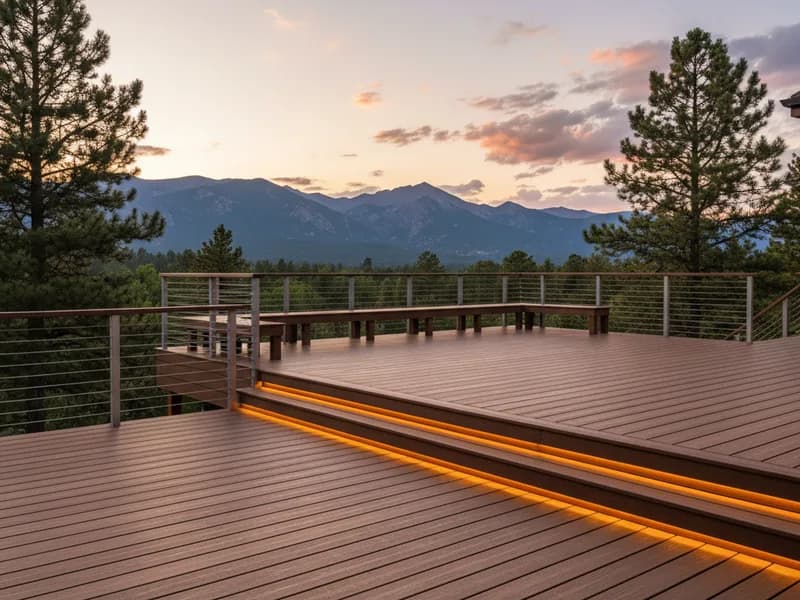
High-end composite deck (400 sq ft): $15,000-25,000 with built-in benches, multi-level design, cable railing, and integrated lighting.
Cost factors: Size (most significant factor), material choice, height above grade (taller decks need more structural support), railing system, built-in features, site access (difficult access increases labor), and permit fees.
Additional costs: Pergola or shade structure ($2,000-8,000), outdoor kitchen integration ($5,000-20,000), hot tub support reinforcement ($1,000-3,000).
Deck ROI and Home Value
Decks provide excellent return on investment in Denver's outdoor-oriented market:
National average ROI: Deck additions recoup 60-75% of costs when selling. Denver market often exceeds this due to our favorable climate and outdoor lifestyle emphasis.
Value factors: Quality construction with permits adds more value than DIY unpermitted work. Composite decks appeal to buyers seeking low maintenance. Well-designed decks that complement home architecture maximize value.
Buyer appeal: Denver homebuyers strongly prefer properties with outdoor living spaces. Homes with decks sell faster and often receive multiple offers in competitive markets.
Lifestyle value: Beyond resale considerations, decks significantly improve daily living quality. Colorado homeowners use decks 6-9 months a
ually, providing substantial lifestyle return on investment.
DIY vs Professional Installatio
nDecide whether to build yourself or hire professionals:
DIY advantages: Save 50-60% on labor costs. Satisfaction of building your own deck. Flexibility to work on your schedule.
DIY challenges: Requires tools (circular saw, drill, level, post hole digger or auger rental). Building knowledge to interpret structural requirements. Physical labor digging footings and carrying materials. Permit navigation and inspection scheduling.
Professional advantages: Proper structural design and code compliance. Faster completion (1-3 weeks vs months for DIYer). Warranty on workmanship. Licensed contractors handle permits and inspections.
When to hire professionals: Large or complex decks (400+ sq ft, multi-level). Second-story decks requiring extensive structural work. Limited DIY experience. Physical limitations. Time constraints.
Deck Timeline Expectations
Realistic scheduling for deck projects:
Design and pla
ing (1-2 weeks): Finalize design, select materials, obtain quotes, apply for permit.
Permit approval (2-4 weeks): Denver plan review timeline varies. Simple deck permits process faster than complex multi-level designs.
Professional construction (1-3 weeks): Excavation and footings (1-2 days), framing and decking (3-5 days), railings and stairs (2-3 days), staining and finishing (1-2 days).
DIY construction (4-8 weeks): Part-time work over multiple weekends. Timeline depends on experience, help availability, and weather.
Best season: Start in spring (April-May) for summer completion. Summer construction works but competes with vacations. Avoid starting after September—cold weather makes staining difficult and slows work.
Making Your Deck Project Successful
Final tips for successful deck projects:
Quality materials: Don't skimp on structural lumber, fasteners, or footings. These hidden components ensure safety and longevity.
Proper drainage: Slight deck slope (1/8 inch per foot) away from house prevents water accumulation. Joist top protection with tape prevents rot.
Future-proof design: Plan electrical outlets, gas lines, or water access for future outdoor kitchens or features even if not installing immediately.
Choose experienced contractors: Verify past deck projects, check references, and ensure proper licensing and insurance. Structural failures from poor construction create safety hazards and expensive repairs.
Peak Builders constructs Colorado decks engineered for our climate. We handle design, permits, and installation, delivering outdoor spaces you'll enjoy for decades. Contact us for a free deck consultation and quote.
Sources: North American Deck and Railing Association, American Wood Council, Composite Decking Manufacturers, Denver Building Permits
Related Resources
Services:
- Outdoor Kitchens - Add cooking to your deck
- Concrete Pavers - Alternative outdoor surfaces
- Home Additions - Expand your indoor space too
- Roofing - Protect your investment
More Reading:
- Outdoor Kitchen Design - Complete outdoor living
- Sustainable Materials - Eco-friendly decking options
- 2026 Construction Trends - Latest developments