Complete Guide to Basement Finishing in Denver
Understanding Denver Basement Constructio
nDenver basements differ from those in other regions due to our clay soil and semi-arid climate. Understanding these factors prevents costly mistakes:
Expansive clay soil: Denver sits on bentonite clay that expands when wet and contracts when dry. This movement creates pressure on foundation walls and can cause cracks. Proper foundation waterproofing and drainage systems are essential before finishing.
Low water tables: Unlike areas with high water tables, Denver basements rarely flood from groundwater. However, poor grading or downspout drainage can fu
el water against foundations, causing leaks and moisture problems.
Radon concerns: Denver area homes often have elevated radon levels due to our geology. Test your basement and install radon mitigation systems if levels exceed 4 pCi/L. This typically costs $800-1,500 and protects your family while meeting code requirements.
Basement Finishing Costs in Denver
Setting a realistic budget prevents surprises and helps prioritize features:
Basic finish ($30-50 per sq ft): Insulation, drywall, basic flooring, electrical, and simple bathroom. A 1,000 sq ft basement costs $30,000-50,000. This level works for storage, home gyms, or playrooms where aesthetics matter less than function.
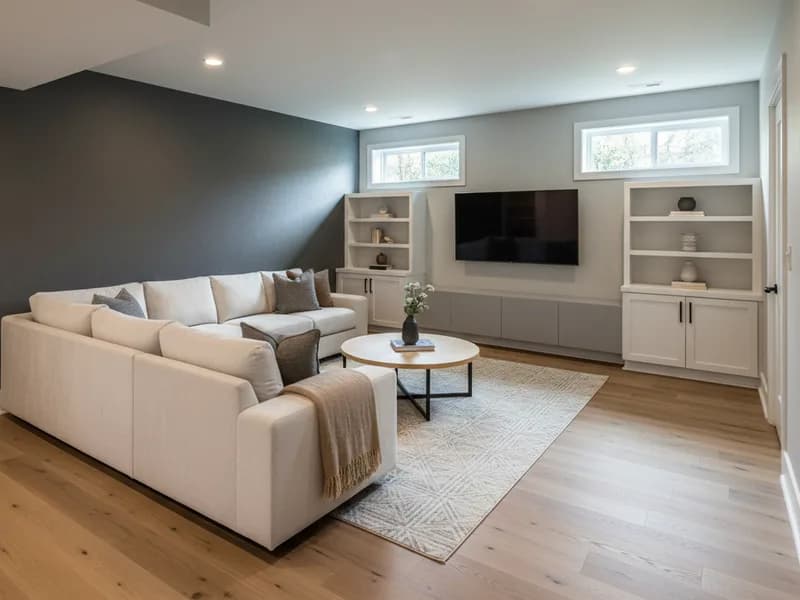
Mid-range finish ($50-75 per sq ft): Quality flooring, recessed lighting, full bathroom, bedroom with egress window, wet bar area, and upgraded finishes. Expect $50,000-75,000 for 1,000 sq ft. This tier creates comfortable living space suitable for regular use or rental income.
High-end finish ($75-120+ per sq ft): Custom cabinetry, stone countertops, hardwood floors, home theater, wine cellar, or luxury bathroom with steam shower. Budget $75,000-120,000+ for 1,000 sq ft. This level makes sense in homes valued at $800,000+ where the basement matches main-level finish quality.
Additional major costs: Egress windows and window wells ($3,500-6,000 each), bathroom additions ($18,000-35,000), wet bars ($5,000-15,000), and HVAC extensions ($2,500-8,000).
Egress Window Requirements
Colorado building code requires egress windows for basement bedrooms—a non-negotiable safety feature:
Egress specifications: Windows must provide 5.7 square feet of opening, with minimum dimensions of 20 inches wide and 24 inches tall. The bottom of the opening ca
ot exceed 44 inches from the floor.
Window well requirements: Wells must extend 36 inches from the foundation and include permanent ladder or steps if the well is deeper than 44 inches. Polycarbonate covers prevent debris accumulation while allowing light.
Installation costs: Cutting foundation, installing window, creating window well, and drainage system costs $3,500-6,000 per window. However, adding a bedroom increases home value by $15,000-30,000, making this investment worthwhile.
Without egress windows, basement rooms ca
ot legally be called bedrooms, significantly limiting functionality and resale value. This is the most important code requirement in basement finishing.
Moisture Control and Waterproofing
Moisture problems destroy basement finishes and create health hazards. Address these issues before finishing:
Interior vs exterior waterproofing: Exterior excavation and waterproofing ($8,000-15,000) provides the best long-term protection but requires digging around your foundation. Interior drainage systems with sump pumps ($3,000-7,000) manage water that enters but don't prevent entry. Most Denver basements need only interior systems unless active leaking exists.
Vapor barriers: Install 6-mil polyethylene sheeting over concrete walls before framing to prevent moisture transmission. This simple step costs $200-400 in materials and prevents musty odors and mold growth.
Dehumidification: Denver's dry climate means basements rarely need permanent dehumidifiers. However, install during finishing and run until moisture levels stabilize. Target 30-50% relative humidity.
Floor moisture testing: Perform calcium chloride tests on concrete slabs before installing flooring. High moisture readings require vapor barrier flooring systems to prevent material damage.
Insulation and Climate Control
Proper insulation and HVAC extension create comfortable basement spaces year-round:
Foundation wall insulation: Spray foam (R-15 to R-20) provides best moisture resistance and insulation value. Rigid foam boards (R-10 to R-15) cost less and work well in dry basements. Avoid fiberglass batts against foundation walls—moisture damages them quickly.
Rim joist insulation: This often-missed area between floor joists and foundation walls accounts for significant heat loss. Spray foam provides best results, preventing drafts and moisture condensation.
HVAC extension: Most Denver basements need heating and cooling added. Options include: extending existing forced-air system (requires ductwork, $2,500-5,000), mini-split systems (no ductwork needed, $3,000-6,000), or electric baseboard heat (lowest cost but higher operating expenses).
Ceiling height considerations: Denver code requires 7-foot minimum ceiling height in finished basements. Homes with low ceilings (common in older Denver properties) may not accommodate drop ceilings with HVAC ducts. Plan ductwork carefully to preserve headroom.
Basement Bathroom Additions
Adding a bathroom dramatically increases basement functionality and home value:
Plumbing considerations: Basements below sewer lines need ejector pumps ($1,200-2,500) to pump waste upward. Most Denver basements sit above sewer lines and can use gravity drainage, significantly reducing costs.
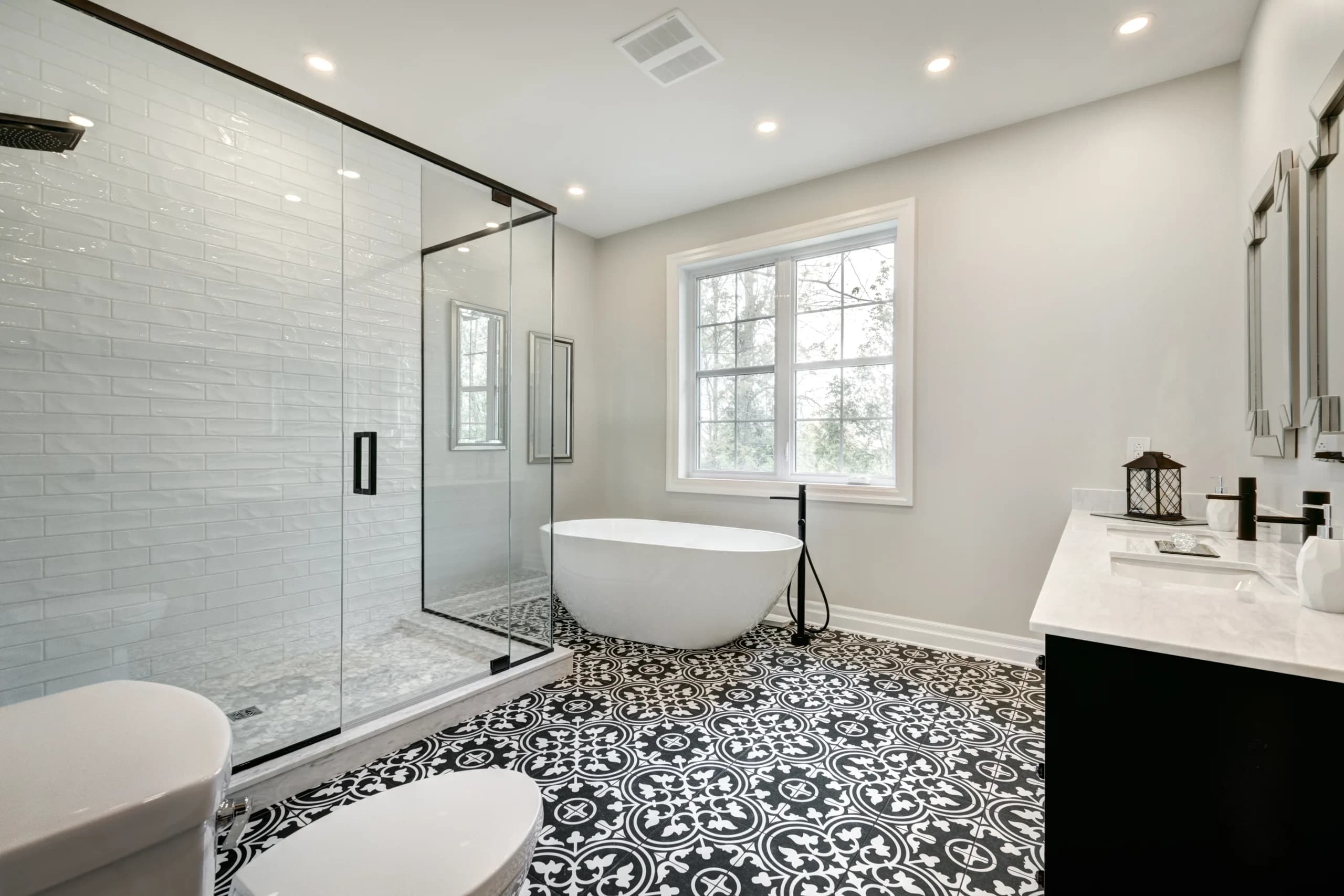
Layout and sizing: Minimum bathroom dimensions are 5 feet by 8 feet for three-quarter bath (shower, toilet, sink). Full baths with tubs need 5 feet by 9 feet minimum. Locate bathrooms near existing plumbing stacks when possible to reduce costs.
Ventilation requirements: Code requires 50 CFM exhaust fan minimum, 80 CFM for larger bathrooms. Vent to exterior, not into basement ceiling. Good ventilation prevents moisture accumulation that damages finishes.
Cost breakdown: Basic three-quarter bath with standard fixtures costs $18,000-25,000. Upgrade to full bath with quality tile and fixtures: $25,000-35,000. Add luxury features like heated floors or custom tile: $35,000-50,000+.
Flooring Options for Denver Basements
Choose flooring that handles occasional moisture while providing comfort and style:
Luxury vinyl plank (LVP): Best all-around choice for basements. Water-resistant, comfortable underfoot, attractive, and affordable ($3-8 per sq ft installed). Quality LVP mimics hardwood convincingly and handles temperature fluctuations without warping.
Engineered hardwood: More expensive than LVP ($8-14 per sq ft installed) but provides authentic wood appearance. Requires moisture testing and vapor barriers. Skip in basements prone to any moisture.
Carpet: Comfortable and warm but risky in basements. If using carpet, choose low-pile with moisture-resistant backing and quality pad. Budget $3-6 per sq ft installed. Consider carpet tiles that can be replaced individually if water damage occurs.
Tile or polished concrete: Best for wet areas like bathrooms or utility rooms. Cold underfoot unless heated. Tile costs $8-15 per sq ft installed. Polished concrete with radiant heat creates modern aesthetic for $8-12 per sq ft.
Avoid solid hardwood in basements—moisture and temperature swings cause warping and gaps. Laminate flooring also performs poorly in basement environments despite manufacturer claims.
Lighting Design for Basements
Proper lighting transforms dark basements into welcoming spaces:
Recessed can lights: LED recessed lights every 6-8 feet provide even ambient lighting. Budget $150-200 per light installed. Use 5-inch or 6-inch housings suitable for basement ceiling heights.
Natural light maximization: Enlarge existing windows where possible and add window wells to increase daylight. Even small windows significantly improve basement ambiance and reduce reliance on artificial light.
Task lighting: Add under-cabinet lights in wet bars, pendant lights over game tables, and track lighting for artwork. Layer lighting creates depth and prevents the flat, institutional feel of overhead-only lighting.
Smart lighting controls: Dimmer switches ($40-80 each) and smart switches ($60-120 each) allow scene setting for different activities—bright for kids' play, dimmed for movie watching.
Plan for one recessed light per 25-35 square feet of space. Kitchenettes and bathrooms need additional task lighting beyond ambient levels.
Popular Basement Uses and Designs
Denver homeowners finish basements for various purposes:
Guest suites: Bedroom, bathroom, and small sitting area create private space for visitors or adult children. Include mini-fridge and microwave for self-sufficiency. Budget $40,000-70,000 for quality finish.
Home theaters: Dark, windowless basements make excellent theater rooms. Soundproofing, tiered seating, projector systems, and acoustic treatments create cinema experience. Expect $30,000-80,000 depending on size and equipment.
Rental apartments: Convert basement to income-producing apartment. Requires separate entrance, full kitchen, bedroom with egress, bathroom, and potentially separate utilities. Budget $60,000-100,000. Ensure local zoning allows basement rental units.
Fitness rooms: Home gyms save money and time versus gym memberships. Rubber flooring, mirrors, and storage for equipment create functional workout space for $15,000-30,000.
Kids' playrooms: Separate play area keeps toys contained while giving kids space to spread out. Durable finishes, plenty of storage, and easy-clean surfaces work best. Budget $25,000-45,000.
Permits and Inspections
Denver requires permits for basement finishing—not optional:
Permit requirements: Any basement finish involving electrical, plumbing, or egress windows needs permits. Costs range from $500-2,000 depending on project scope.
Inspection timeline: Expect inspections at framing stage (checking egress windows, fire blocking), rough-in stage (verifying electrical and plumbing), and final stage (confirming all systems meet code). Each inspection must pass before proceeding.
Benefits of proper permits: Permitted work adds to home value, provides legal protection, ensures safety code compliance, and prevents problems when selling. Buyers often require sellers to permit previous unpermitted work, causing delays and expense.
DIY vs contractor: Homeowners can pull permits and do work themselves, but most lack knowledge of current code requirements. Licensed contractors understand requirements and have relationships with inspectors that smooth the approval process.
Timeline and Project Pla
ing
Realistic timeline expectations prevent frustration:
Design and pla
ing (2-4 weeks): Develop layout, select finishes, obtain quotes, secure financing, and apply for permits.
Construction timeline (6-12 weeks): Permit approval (2-3 weeks), framing and egress windows (1-2 weeks), plumbing and electrical rough-in (1-2 weeks), insulation and drywall (2-3 weeks), finishes including flooring, painting, trim (2-4 weeks).
Factors that extend timelines: Structural issues discovered during demolition, permit delays, material backorders, and weather (exterior egress window installation requires dry conditions).
Living in your home during construction: Most families remain in their homes during basement finishing. Expect noise, dust (despite contractor efforts to contain it), and workers present 8-10 hours daily.
Making Your Basement Finishing Investment Pay Off
Maximize your basement finishing return:
Focus on universal appeal: Neutral colors, classic finishes, and flexible layouts appeal to the broadest buyer pool. Highly personalized designs limit future buyer interest.
Don't over-improve: A $100,000 basement in a $500,000 home is over-improvement. Match basement finish quality to your neighborhood and home value.
Prioritize the bathroom: Basement bathroom additions return 80-90% of costs versus 60-70% for finishing without a bathroom. If budget is tight, include the bathroom and finish remaining space later.
Proper documentation: Keep all permits, inspection records, and warranties. Provide these to buyers demonstrating the quality and legitimacy of your basement finish.
Peak Builders specializes in Denver basement finishing, understanding our unique soil conditions, code requirements, and design preferences. Contact us for a free consultation to explore your basement's potential.
Sources: International Code Council, Colorado Geological Survey, EPA Radon Information, Remodeling Magazine Cost vs Value
Related Resources
Services:
- Basement Finishing Services - Professional basement renovation
- Bathroom Remodeling - Add a basement bathroom
- ADU Construction - Legal rental unit options
- Home Additions - Above-ground expansion options
More Reading:
- ADU Construction Guide - Rental unit considerations
- Kitchen Remodeling Trends - Design inspiration
- Sustainable Materials Guide - Eco-friendly finishes