
Should You Remodel or Move? A Denver Homeowner's Honest Guide
Every week, we sit down with Denver homeowners facing the same dilemma: "Should we remodel this house or just find a new one?"
It's not a simple question. Your home isn't just square footage and finishes—it's where your kids took their first steps, where you've hosted Thanksgiving for a decade, where you know exactly which floorboard creaks at 2 AM when you're trying not to wake anyone.
But emotions aside, this is also one of the biggest financial decisions you'll make. So let's look at it honestly, with real Denver numbers.
The True Cost of Moving in Denver (It's More Than You Think)
When people consider moving, they usually think about the new house price and maybe the realtor commission. But the full picture in Denver's 2026 market looks like this:
Selling your current home:
- Realtor commissions: 5-6% of sale price (on a $650,000 home, that's $32,500-$39,000)
- Closing costs: 1-3% ($6,500-$19,500)
- Pre-sale repairs and staging: $5,000-$15,000
- Photography and marketing: Often included, but sometimes $500-$2,000
Buying your new home:
- Closing costs: 2-5% of purchase price
- Inspection and appraisal: $800-$1,500
- Moving costs: $3,000-$10,000 (local Denver move)
- New furniture and window treatments: $5,000-$20,000 (because nothing fits quite right)
- Immediate repairs and updates: $5,000-$15,000 (there's always something)
The hidden cost nobody mentions: If you're upsizing, your property taxes, insurance, and utilities all increase. On a $200,000 price jump, expect an extra $3,000-$5,000 annually in carrying costs.
Add it all up, and moving a Denver family from a $650,000 home to an $850,000 home typically costs $80,000-$120,000 in transaction costs alone—before you've added a single dollar of equity.
What That Same Money Buys in a Remodel
Here's where it gets interesting. That $80,000-$120,000 in moving costs could fund:
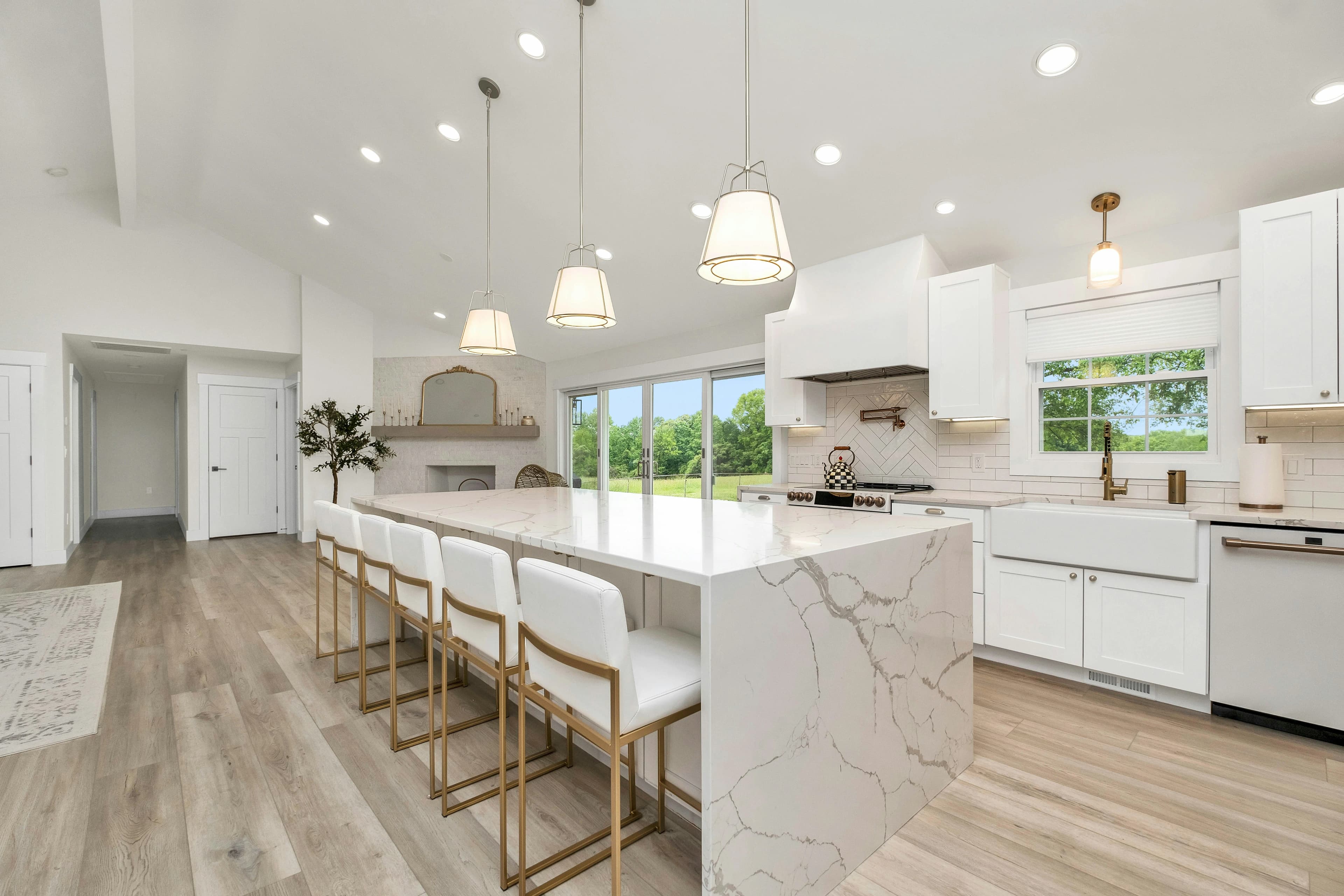
- A complete kitchen renovation with custom cabinets and quartz countertops ($45,000-$65,000)
- A master bathroom transformation ($25,000-$40,000)
- AND a finished basement with bedroom, bathroom, and entertainment space ($40,000-$60,000)
Or if you need more space:
- A 400-square-foot addition with a new bedroom and bathroom ($80,000-$120,000)
- A detached ADU for rental income or family ($150,000-$250,000)
The difference? Remodeling dollars go directly into your home's value. Moving costs mostly disappear into fees and transaction friction.
When Moving Actually Makes Sense
We're contractors, so you might expect us to always push remodeling. But honestly? Sometimes moving is the right call:
Your neighborhood has changed. If you bought in a quiet area that's now surrounded by commercial development, or crime has increased, or schools have declined—no renovation fixes that.
You need a completely different house. If you have a 1,200-square-foot ranch and need 3,000 square feet with a three-car garage, the math rarely works. Major structural changes and additions can cost more than buying new construction.
Your commute is killing you. If a job change means your spouse now drives 90 minutes each way, quality of life matters more than transaction costs.
The bones aren't good. Foundation problems, major structural issues, outdated electrical throughout, significant water damage—these are money pits. Sometimes it's smarter to start fresh.
You're in a hot neighborhood and want to cash out. If your Denver neighborhood has appreciated significantly and you're willing to move somewhere less expensive, selling high and buying low can be strategic.
When Remodeling Is the Clear Winner
On the flip side, remodeling almost always wins when:
You love your location. You can change your house. You can't change being three blocks from your kids' school, or your 10-minute commute, or your neighbors who've become family.
Your home has good bones. Solid foundation, good roof, adequate electrical service, reasonable layout. These homes are worth investing in.
You'd be moving laterally. If you'd sell your $650,000 home to buy another $700,000 home that also needs updating—you're just paying transaction costs to inherit someone else's problems.
Interest rates have risen since you bought. If you locked in a 3% mortgage in 2021 and current rates are 7%, your monthly payment on the same loan amount would increase by 40%. That $2,000 payment becomes $2,800. Staying put and remodeling preserves that rate.
You have specific needs a remodel can address. Need a home office? First-floor master for aging parents? Updated kitchen for a serious home cook? These are solvable problems.
The Denver-Specific Factors
Denver's market has some unique considerations:
Inventory is still tight. Even in 2026, finding the perfect Denver home remains challenging. You might sell quickly but spend months searching for the right replacement—meanwhile staying in temporary housing or dealing with contingent offers.
New construction comes with trade-offs. Those pristine new builds in the suburbs often mean longer commutes, smaller lots, and cookie-cutter designs. Plus HOA fees that can exceed $300/month.
Older Denver homes have character. There's a reason people pay premiums for Washington Park Victorians and Highlands bungalows. You can't recreate that craftsmanship or those established trees in new construction.
ADUs are now legal citywide. If you need more space or want rental income, Denver's ADU-friendly regulations mean you can add a backyard cottage or convert a garage—options that weren't available a few years ago.
A Framework for Deciding
After hundreds of these conversations, here's the framework we use:
Step 1: List your non-negotiables. What must change? More space? Better kitchen? Different neighborhood? Be specific.
Step 2: Get real numbers. Have a realtor give you a realistic sale price and show you what's actually available in your target range. Have a contractor quote your remodel wish list. Compare apples to apples.
Step 3: Factor in the intangibles. Will your kids have to change schools? How much do you value your current community? Can you handle 6-8 weeks of construction disruption versus 3-6 months of house hunting, packing, and moving?
Step 4: Run the 10-year math. Where does each option leave you financially in a decade? Include appreciation, mortgage paydown, and opportunity cost.
Step 5: Trust your gut. After all the analysis, how do you feel? Sometimes the spreadsheet says move but your heart says stay. That matters.
What We See Most Often
In our experience, about 70% of Denver homeowners who seriously consider both options end up remodeling. The main reasons:
- Transaction costs are just too high to justify
- They can't find anything better in their price range
- Their current location is irreplaceable
- They realize they can get exactly what they want for less than moving costs
The 30% who move usually have a compelling reason beyond just wanting updates—a major life change, a problematic house, or a significant location upgrade.
Ready to Explore Your Options?
If you're wrestling with this decision, we're happy to help you think it through. We'll give you honest numbers on what your remodel would cost and whether it makes sense compared to moving.
No pressure, no sales pitch—just real information to help you make the right choice for your family.
Call us at (720) 605-7785 or request a consultation online. We've helped hundreds of Denver families navigate this decision, and we'll give you the straight truth about your options.